
Beyond the Baby Blues: How We Can Support Women and Birthing People
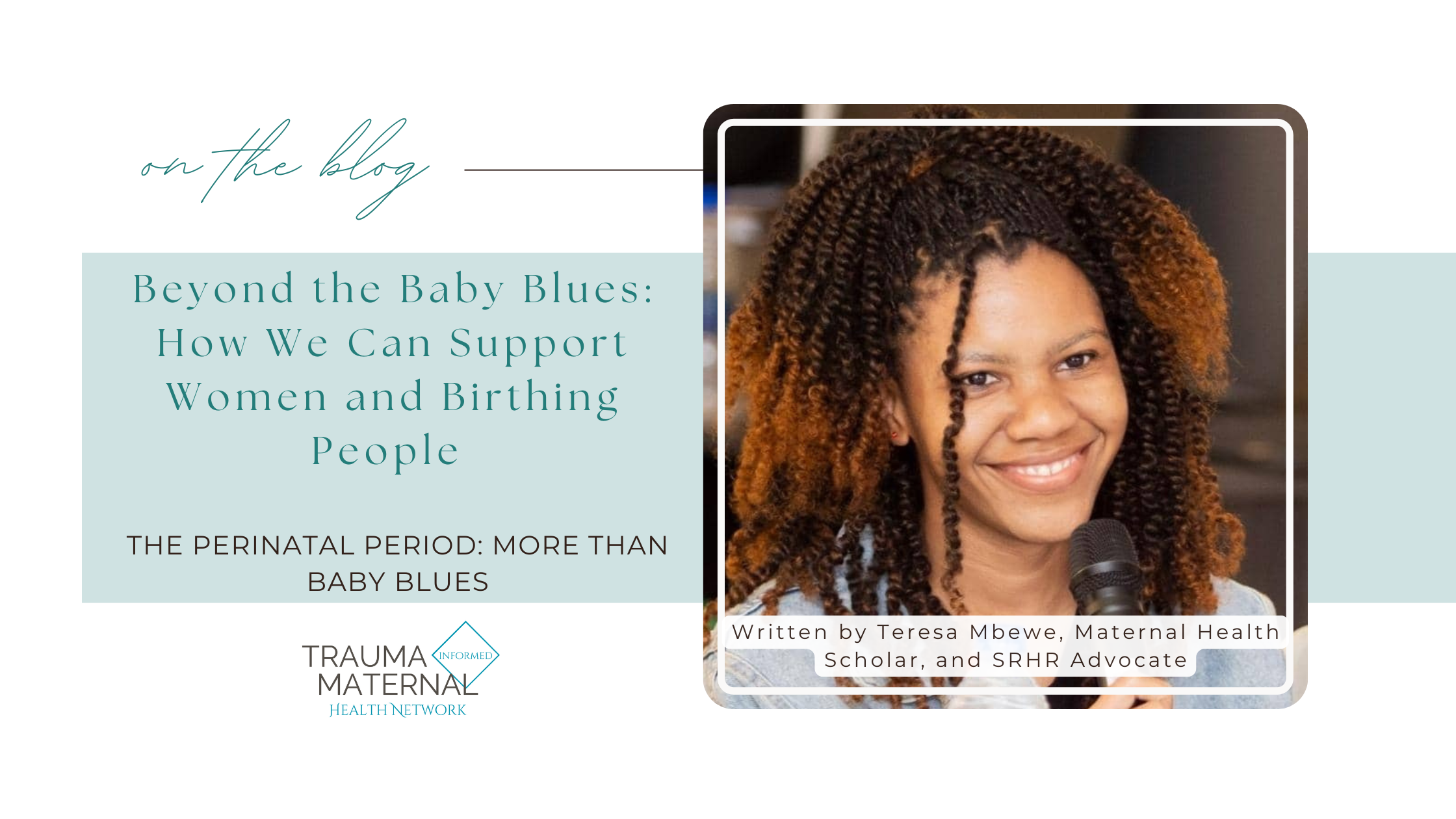
Written by Guest Blogger Teresa Mbewe, Maternal Health Scholar, and SRHR Advocate
Beyond the Baby Blues: How We Can Support Women and Birthing People
The Perinatal Period: More Than Baby Blues
In my work supporting mothers in Malawi, I’ve seen how trauma, stigma, and emotional challenges shape the perinatal experience. While my examples come from the communities I’ve worked with, many of these experiences reflect what women and birthing people face globally. The insights in this piece begin from that context but speak to a broader audience navigating pregnancy, birth, and postpartum.
The perinatal period– a time that includes pregnancy and the first year after birth– can be full of joy, change, and deep emotions. For many mothers, this period can bring up memories of past trauma. Trauma can affect how a mother feels about her body, her pregnancy, or the care she receives. It can appear not only during pregnancy and postpartum but also while trying to conceive or coping with pregnancy loss.
For some mothers, depression and anxiety can be severe. A small number of new mothers may experience postpartum psychosis, a mental health condition involving a loss of touch with reality, hallucinations, and extreme confusion. While rare, these situations show why early support, understanding, and trauma-informed care are so important.
Depression and anxiety are common during this period, yet many mothers face stigma, cultural misconceptions, and systemic barriers that prevent them from seeking help.
Screening tools like the Edinburgh Postnatal Depression Scale (EPDS) and Patient Health Questionnaire (PHQ) can identify mothers at risk, but detection alone is not enough. Meaningful support must always follow.
How Trauma Can Affect Mothers
Trauma can manifest in many ways, such as:
Past abuse or neglect
Sexual trauma that makes exams, labor, or breastfeeding feel unsafe
Medical trauma from infertility, complications, or difficult past births
Birth trauma, loss, or emergency deliveries
Stressors like limited healthcare access and gender expectations can intensify these experiences. Trauma may show up in many ways, such as anxiety, dissociation, or difficulty bonding.
Many mothers and birthing people don’t disclose their experiences due to stigma and fear of judgement. Others might not even recognize their experiences as trauma especially if this has never been acknowledged to them.
Partners may also experience emotional strain during this period, and including them in conversations helps strengthen support for the entire family.
Principles of Trauma-Informed Care
Trauma-informed care focuses on:
Safety
Trust and transparency
Peer support
Collaboration
Empowerment and choice
Cultural awareness
For example, a healthcare provider might say:
“I’ll explain each step of this exam. You can ask me to pause or stop anytime. Would you like me to walk you through it?”
This promotes safety and choice while empowering the mother.
Practical Ways to Support Mothers
For Providers: Incorporate trauma-informed principles in every interaction. Ask open-ended questions about past experiences and include routine screening for perinatal mental health concerns. During exams, offer simple grounding techniques to help mothers feel safe. Keep an up-to-date referral list for specialized perinatal mental health services so support is easy to access.
For Systems and Policymakers: Train healthcare providers in trauma-informed care, reduce barriers to care, and integrate maternal mental health with Sexual and Reproductive Health and Rights (SRHR) services, particularly in underserved or rural areas.
Digital tools like telehealth, mental health apps, and online support groups can help birthing people access care when in-person services are limited.
For Families and Communities: Normalize conversations about emotional wellbeing, recognize warning signs of depression or anxiety, and provide practical support. Listening without judgment is key.
Support can also come from partners, relatives, friends, or any trusted person in the mother’s circle.
Integrating SRHR into Maternal Mental Health Care
A mother’s mental health and her sexual and reproductive health are closely connected. Limited access to contraception, unintended pregnancies, and stigma around reproductive choices can increase stress and anxiety. Trauma-informed care should consider these factors, ensuring mothers receive support that addresses mental, physical, and reproductive wellbeing together.
The Ripple Effect of Trauma-Informed Care
When mothers feel heard and supported, their wellbeing improves. This benefits families, communities, and healthcare systems.
By breaking down barriers, supporting women and birthing people through trauma-informed approaches, and expanding inclusive SRHR support, we create environments where all parents can thrive.
Depression and anxiety during the perinatal period are real and valid experiences. By listening, understanding, and offering trauma-informed support, we can help mothers and birthing people not just navigate these challenges, but truly thrive in their journey to parenthood.
When we prioritize maternal mental health, we strengthen future generations, too.
- - - - -
Guest Author: Teresa Mbewe, Maternal Health Scholar, and SRHR advocate
Teresa Mbewe is a maternal mental health advocate from Malawi with hands-on experience supporting mothers and families. She has participated in the eMAMA Post-Graduate Maternal Mental Health Programme, helping mothers navigate pregnancy and postpartum challenges with trauma-informed care. Teresa is also passionate about sexual and reproductive health and rights (SRHR), promoting strategies that empower adolescent, young women and communities to create safe, informed, and compassionate care environments.
Instagram: https://www.instagram.com/teresambewe
eMAMA Post-Graduate Maternal Mental Health Programme (Erasmus+ Programme)
About the Trauma-Informed Maternal Health Directory
Liz Gray, LCSW and Olivia Verhulst, LMHC, PMH-C— co-founders of the Trauma-Informed Maternal Health Directory— are clinical psychotherapists with a deep passion for increasing accessibility of trauma-informed care to the maternal health population.
They created this specialized directory to connect women & birthing people to trauma-informed health & mental health providers who specialize in infertility, pregnancy, postpartum, and new parenthood.
Search the directory: https://directory.maternaltraumasupport.com/
Interested in writing a guest blog post?
If you are a trauma-informed provider who works with the perinatal population, submit a blog proposal HERE!
Please make sure the article is original content that aligns with our values of safety, inclusion, transparency, collaboration, empowerment, and support.

Pregnancy loss is a deeply significant experience, yet many grieving parents face stigma, silence, and a lack of support. This article explores the physical, emotional, financial, and relational impacts of pregnancy loss, why grief after loss can feel isolating, and how friends, family, and partners can offer meaningful support. Whether a loss happens early or later in pregnancy, every loss matters and every grieving parent deserves compassion, understanding, and care.