
9 Losses, 1 Mission: A Mother's Journey Through Pregnancy After Loss
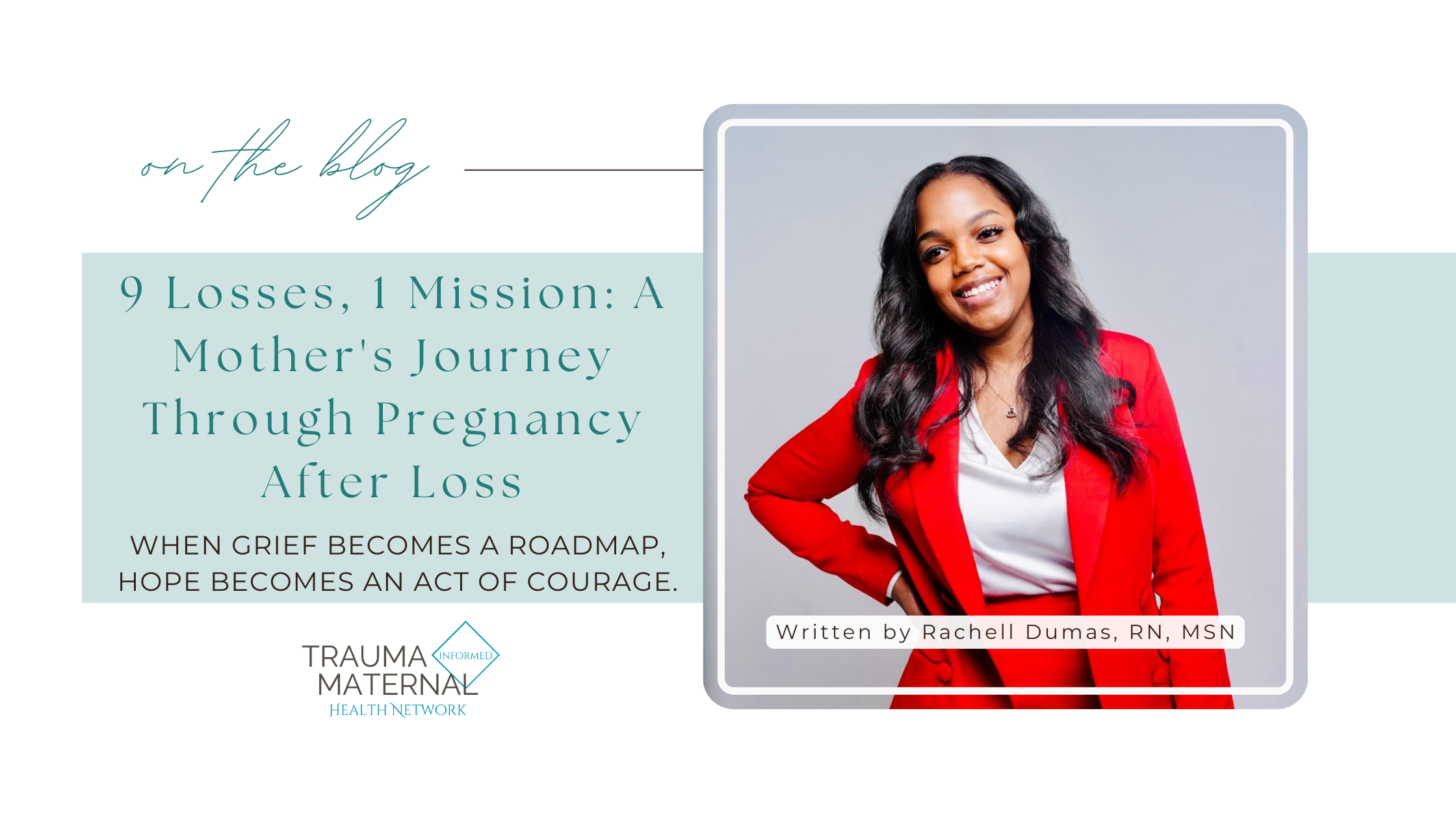
Written by Guest Blogger Rachell Dumas, RN, MSN
9 Losses, 1 Mission: A Mother's Journey Through Pregnancy After Loss
When grief becomes a roadmap, hope becomes an act of courage.
Pregnancy after loss is not a fresh start. It is courage with grief still in the room.
I became a mother long before I ever held my son in my arms.
I became a mother in emergency rooms. In bathrooms. In ultrasound rooms. In silence. In shock. In grief.
Before I had my son, I endured nine pregnancy losses, and I need to tell my story the right way because loss is often discussed like it is one moment.
For me, it was nine separate moments that changed who I am.
The first time I saw two lines
My first positive pregnancy test felt like a miracle. I did what every woman does when she believes it is finally her time. I started imagining my future. I started picturing the baby. I started believing.
Then I started bleeding.
I remember staring down, trying to convince myself it was nothing. Trying to calm my mind, while my body was already telling me the truth. I went to the doctor holding on to a small piece of hope.
I left carrying grief.
That was the day my innocence about pregnancy ended.
When fear started replacing joy
The next pregnancy should have brought excitement back. It did not. It brought anxiety. I became hyper-aware of every symptom. I was checking my body constantly, counting days like time could protect me.
Then the bleeding came again.
Another loss. Another empty appointment. Another moment where the world kept moving like nothing happened.
When silence became my coping mechanism
After that, I stopped sharing my news. I stopped speaking things aloud. I learned to protect myself by staying quiet. I was pregnant privately, and I carried my hope like it was fragile glass.
When that pregnancy ended too, something shifted in me.
This was no longer “bad luck.”
This was becoming a pattern.
When hope started to feel dangerous
The next time I got pregnant, I was not happy. I was guarded. I told myself not to get attached.
But you cannot carry life and not love it.
That loss cracked something open. It was grief, but it was also anger. Confusion. Exhaustion. It was me asking God why my body could create life but could not keep it.
When my body felt like an unsafe place
As the losses continued, the dream of motherhood began to feel like a constant emergency. Every appointment felt like I was waiting for a verdict. Every cramp made my heart race. Every shift in my body pulled me back into fear.
At some point, I stopped expecting pregnancy to end in a baby. I started expecting it to end in loss.
That is what recurrent loss does. It trains your body to panic and your mind to brace for impact.
When I did everything “right” and still suffered
I tried everything.
The vitamins. The lifestyle changes. The careful routines. The praying. The researching. The hope that if I worked hard enough, I could earn a different outcome.
But effort does not equal protection.
And after so many losses, sympathy starts to feel like a placeholder because what you need is not just comfort. What you need is care. Answers. Safety.
When trauma became my baseline
Another pregnancy came, and by then my nervous system was constantly activated. I could not relax. I could not sleep normally. I lived on edge, waiting for the familiar signs that something was wrong.
When the loss happened, I felt numb in a way that scared me. I did not just feel grief. I felt disconnected from my own body, like it was no longer mine.
When I stopped expecting people to understand
By the time I had experienced that many losses, I learned how to suffer silently. I stopped expecting people to know what to say. I stopped expecting them to sit with my pain. Sometimes it was easier to grieve alone than to be disappointed by the comfort people tried to offer.
People became uncomfortable. They wanted to force hope onto me.
“It will happen.”
But nobody knows that.
And after so many losses, hope without action starts to feel cruel.
When my life became “back and forth”
Then came the pregnancy that still shakes me.
I was hemorrhaging. I was going back and forth to the doctor, back and forth to the ER, back and forth begging to be taken seriously.
And I was told everything was fine.
I knew it was not fine.
I knew my body. I knew what I was seeing. I knew how much blood was not normal. But I kept getting dismissed. I kept getting sent home. I kept getting told to wait.
And then I lost my baby.
That loss did not just break my heart.
It broke my trust.
And as a nurse, it changed the way I view healthcare forever. Because dismissal is not just frustrating. It is dangerous. It creates preventable harm. It shifts outcomes. And for Black women, it is far too common.
Pregnancy after loss
Pregnancy after loss is not just being pregnant again.
It is being pregnant while grieving.
It is being pregnant while terrified.
It is being pregnant while carrying your past in your body.
You want to celebrate, but you cannot.
You want to bond, but fear blocks you.
You want to trust your providers, but your body remembers the times you were ignored.
Then I had my son
When I finally carried my son, Nazaire, it did not feel magical.
It felt like survival.
Even then, I could not fully relax. I watched everything. I waited for something to go wrong because that is what loss trains you to do.
Motherhood did not erase my grief.
It lived beside it.
A Light After Nine
That is why I created A Light After Nine.
Because I know what it feels like to lose hope. I know what it feels like to be dismissed. I know what it feels like to walk through pregnancy with grief living in your chest.
I created this nonprofit so families navigating infertility, pregnancy loss, and high-risk pregnancy do not feel alone, and so we can push for trauma-informed maternal care that listens when women say, “Something is wrong.”
My story is nine losses.
But it is also persistence.
It is also advocacy.
It is also faith.
It is also purpose.
And it is the reason I will spend the rest of my life making sure women are heard.
- - - - -
Guest Author: Rachell Dumas, RN, MSN
Rachell Dumas, RN, MSN is a registered nurse, maternal health advocate, and founder of A Light After Nine, a nonprofit created to support families navigating infertility, pregnancy loss, and high-risk pregnancies. After experiencing nine pregnancy losses, Rachell transformed her personal story into a mission focused on trauma-informed advocacy, healing-centered support, and improving maternal outcomes through community education and systems accountability.
Website: www.alightafternine.org
Instagram: https://www.instagram.com/alightafternine
Instagram: https://www.instagram.com/therachelldumas
About the Trauma-Informed Maternal Health Directorywww.alightafternine.org
Liz Gray, LCSW and Olivia Verhulst, LMHC, PMH-C— co-founders of the Trauma-Informed Maternal Health Directory— are clinical psychotherapists with a deep passion for increasing accessibility of trauma-informed care to the maternal health population.
They created this specialized directory to connect women & birthing people to trauma-informed health & mental health providers who specialize in infertility, pregnancy, postpartum, and new parenthood.
Search the directory: https://directory.maternaltraumasupport.com/
Interested in writing a guest blog post?
If you are a trauma-informed provider who works with the perinatal population, submit a blog proposal HERE!
Please make sure the article is original content that aligns with our values of safety, inclusion, transparency, collaboration, empowerment, and support.
Trauma doesn’t suddenly disappear when you become a mother. For survivors of abuse, violence, or other painful experiences, the fourth trimester can activate old wounds in ways that might impact bonding, mental health, and everyday functioning. The good news is that with trauma-informed care and the right support, healing is possible and within reach.